Schedule | - 4:46 pm
This Sunday, January 25th, at 10 AM, Will Be a Day of Reencounter With God
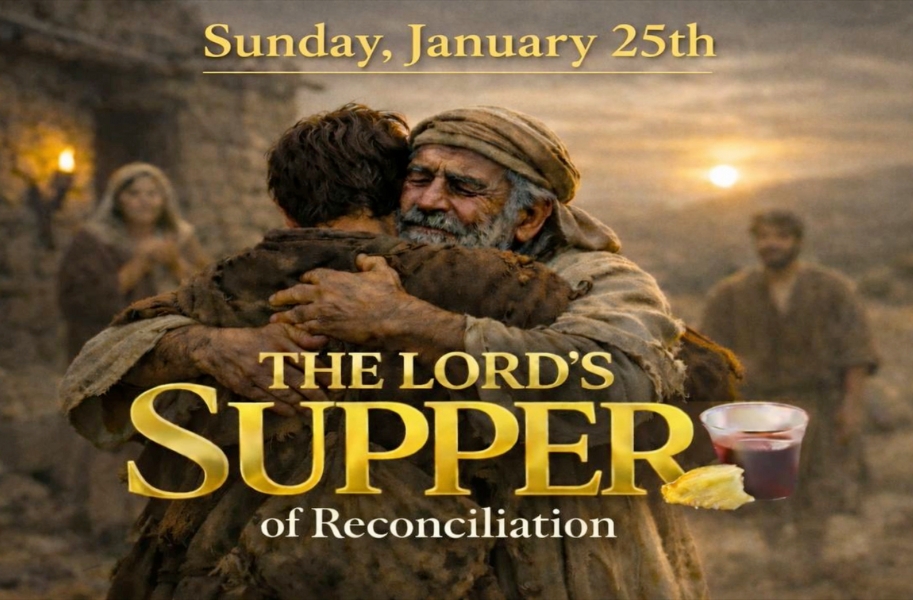
And he said, ‘A certain man had two sons.’ (Luke 15:11)
The parable known as the Prodigal Son intentionally begins by highlighting that there were two sons. The Lord Jesus Himself made this clear from the very first sentence. Yet, most of the time, attention focuses only on the younger son: his rebellion, his fall, and the father’s mercy in welcoming him back with a celebration.
However, the story goes deeper than that. It speaks not only of the son who left home, but also of the son who stayed. When the younger son returns, repentant and greeted with joy, the older brother reacts in an unexpected manner. The Bible recounts:
But he was angry and would not go in… (Luke 15:28)
Indignation, resentment, bitterness—these feelings are not just directed at his brother but mainly at his father. Notice how he refers to his brother: “this son of yours…” He does not call him “brother.” Resentment breaks bonds.
The story concludes with the prodigal son forgiven, restored, and reconciled with his father. In contrast, the older son remains outside the celebration, carrying a double grudge: one against his brother and another against his father.
A crucial question arises: What mistake did the father make to deserve this resentment? None.
The older son’s resentment stemmed from comparison, a feeling of superiority, and the belief that he deserved more because he “never made a mistake.” Ultimately, his mistake was more serious than his brother’s: he allowed bitterness to take over his heart.
This parable reveals two realities that still exist today:
• Outside the Church: Many prodigal sons—people who were once in the Father’s House but are now far away, wounded, and fallen.
• Inside the Church: Many “older brothers”—people who are physically present but are bitter toward God and fellow believers, often due to unresolved situations.
Disappointment, frustration, a sense of injustice, or simply being contradicted have caused them to harbor resentment, which holds them back in life.
The Bible teaches a clear principle: forgiveness heals, unites, and allows for new beginnings. Resentment poisons the heart and destroys the person both inside and out.
“Know this: as long as you don’t forgive, your life will remain stuck,” highlighted Bishop Macedo during the morning Bible meditation. Watch below:
Now, an invitation: Take a moment to pray. Ask God to reveal any hidden hurt or resentment in your heart. Decide to forgive—not because the other person deserves it, but because you need to be free.
This Sunday, the 25th, at 10 AM, the Extraordinary Lord’s Supper of Reconciliation will take place at The Universal Church. It will be a reencounter with God for all, even within the church, who need to return to the Heavenly Father with all their hearts. You are our guest.
Everyone is welcome, regardless of religious beliefs or background. For more information, please call 1-888-332-4141 or text 1-888-312-4141.
If you live in a city without one of our locations or cannot commute due to health reasons, we invite you to join our Virtual Church on Saturday at 8 AM CT / 9 AM ET via Zoom and phone conference.